Stonington Garden Club
– Beautification – Conservation – Education –










The Stonington Garden Club, founded in the early 1900s, is a non-profit organization with 52 active members and 17 friends. We are affiliated with The Garden Club of America, Federated Garden Clubs of Connecticut, Inc., National Council of State Garden Clubs, Inc. and Garden Clubs of Southeastern Connecticut.
2008 “Gardens By The Sea” Tour… Coming June 20 & 21!
Earth Friendly Alternatives
to herbicides, pesticides and household chemicals:
A Concise Guide
2nd Edition Now Available for Sale!
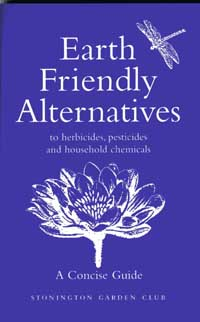
Click here to view Table of Contents
and get ordering information
The Stonington Garden Club, Inc., is governed by an Executive Board and Standing Committee Chairmen.
The SGC is an active group. Check out our program Calendar and you’ll find something for everyone. We have a very active Conservation Committee, who have recently (February, 2005) published the second revision of Earth Friendly Alternatives. Our club strongly supports IPM (Integrated Pest Management). Click on Projects & Events, and enjoy the highlights of our very successful 2005 & 2002 garden tours, Gardens by the Sea . Through our Garden Tips & Hints section we share garden information from our members. For those who like to cook, our club members pass on their favorite recipes.

This site has been visited 6777 times
| Home | Executive Board | Earth Friendly | IPM | Calendar | Projects & Events | Garden Tips |
| History | Contact Us | Recipes |